
Publisher Strategy
The 6 publisher categories every affiliate program needs (and what each does for you)
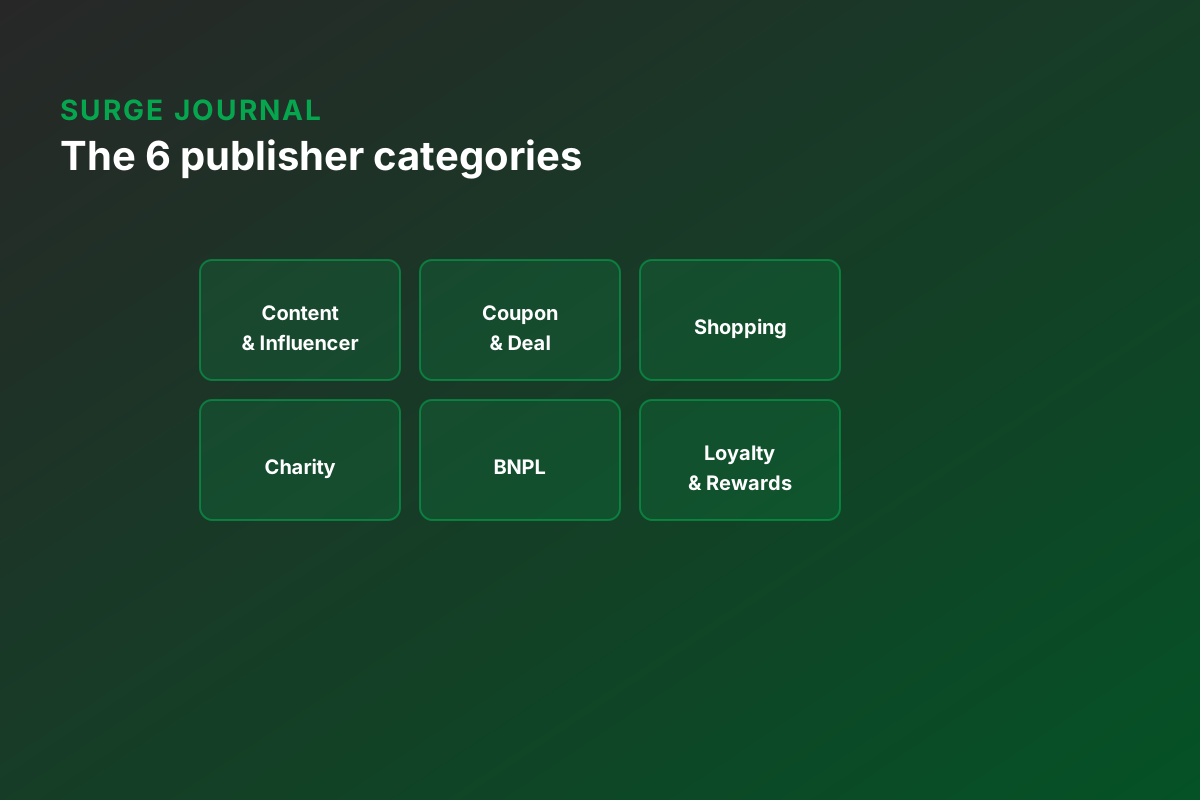
Most underperforming affiliate programs share one thing in common: they over-rotate on a single publisher category. Usually deal sites, because they auto-apply when you launch on a network. The result — sales look good on paper but most are not incremental, and growth plateaus.
Best-in-class programs deliberately balance across six publisher categories. Each does a different job in the funnel. Here is what each category does, who the major players are, and how to think about budget allocation.
1. Content & influencer
Job: top-of-funnel discovery. Long-form editorial, product round-ups, creator storefronts.
Major players: Condé Nast, Hearst, LTK (LikeToKnow.it).
Content publishers introduce your brand to high-intent audiences who would not have found you through paid social. A single placement in a category-relevant editorial (Marie Claire for beauty, Hearst for home, Condé Nast for fashion) can drive months of evergreen sales.
LTK is the dominant creator storefront platform — creators build product collections that earn commission on sales. Crucial for apparel, beauty, and lifestyle brands.
2. Credit card linked offers
Job: card-linked incremental spend. Distribution into the wallets of high-intent, high-AOV cardholders.
Major players: American Express, Chase, Mastercard.
Card-linked offer networks let brands push targeted rewards (statement credits, bonus points, cashback) directly to a card network’s cardholders. The audience is pre-qualified by spend behavior, and the offer only redeems when the customer actually transacts on the linked card — so it rewards incrementality by design.
This category punches above its weight for premium and considered-purchase verticals where the card audience overlaps tightly with the brand’s ideal customer.
3. Shopping & deal
Job: vertical-specific product discovery, deal aggregation, and comparison.
Major players: ShopStyle, Lyst, Capital One Shopping.
Shopping & deal sites aggregate product catalogs and apply best-available offers at checkout. Most relevant for apparel, accessories, beauty, and home goods. Lyst is a strong driver for premium and luxury fashion brands; Capital One Shopping brings a large built-in cardholder base actively browsing for offers.
4. Charity
Job: mission-aligned audiences with pre-qualified buyer intent.
Major players: StudentBeans, FlipGive, Giving Assistant.
Charity publishers route a portion of each commission to a cause or community (schools, teams, causes). Their audiences are pre-qualified buyers who actively prefer brands that participate. Often overlooked but consistently high new-customer ratio.
5. Tech solutions
Job: on-site conversion lift, AOV expansion, and cart-recovery — activated through the affiliate channel instead of paid directly.
How it works: Many of the same tools brands evaluate as standalone SaaS (on-site personalization, exit-intent and email-capture, cart abandonment, post-purchase upsell) are also available as affiliate partners. When you run them through your program, they get paid on performance — a CPA on incremental conversions — instead of a flat monthly platform fee.
For most brands that means the same conversion lift at a meaningfully lower fixed cost, with the spend automatically scaling to outcomes. It is one of the highest-ROI line items to layer into a mature program.
6. Loyalty & rewards
Job: cashback and rewards distribution, structured for new-customer KPIs.
Major players: Rakuten, TopCashback, Ibotta.
Loyalty programs are massive distribution channels — Rakuten alone has 17M+ members. The risk is similar to deal sites (rewarding returning shoppers), but the upside is significant if commissions are tiered to favor new customers.
Why the full-funnel matters
A program running only deal + loyalty hits a ceiling. There is only so much last-click traffic to capture. Adding content + influencer + shopping discovery expands the top of funnel, which feeds more buyers into the bottom-funnel publishers later.
The math: a typical full-funnel program contributes 10–20% of revenue with 40%+ new customer ratio. A deal-only program tops out at 5–8% of revenue with most of that being incremental of zero.
The fix is sequencing — recruit content publishers first (long ramp), then layer on loyalty + card-linked + shopping (faster ramp), and let tech solutions plug in once the program is mature enough to value the CPA-vs-SaaS tradeoff.
Frequently asked questions
How do I know my mix is unbalanced?
Pull a report from your affiliate network showing sales by publisher category. If any single category is over 60% of sales, you are unbalanced. Healthy programs typically run: 25–35% content/influencer, 20–30% loyalty, 15–25% shopping & deal, 10–20% card-linked, 5–10% tech solutions, 2–5% charity.
Which category drives the highest new-customer ratio?
Content & influencer, followed by charity and card-linked offers. Deal sites and loyalty trend lower because they capture existing demand.
How long does it take to recruit content publishers?
2–6 weeks per partner including outreach, negotiation, creative pack, and platform onboarding. Top-tier publications (Marie Claire, VOGUE, Allure) typically take longer and require a meaningful affiliate program offer to engage.
Can I run charity publishers without it being weird?
Yes — charity publishers are conventional affiliate partners that route a percentage of their commission to causes. From the brand side, the offer terms look the same as any other publisher. The audience benefit happens downstream.
Are these the only categories?
Six is a useful organizing structure but real programs also touch TM+ partners (Wickfire, Prodege, The Good Finds) who test non-brand keywords on a CPA basis, and review aggregator sites (BestReviews, Natural Intelligence) that publish category-comparison content.
Need help applying this?
Let's pressure-test your affiliate program.
Surge runs affiliate programs for ecommerce brands across the U.S. The audit is complementary — book a call to see what a healthier publisher mix and tighter commission design could do for your numbers.
LET'S SURGE!