
Affiliate Marketing 101
What a healthy affiliate program looks like: the 10–20% revenue benchmark
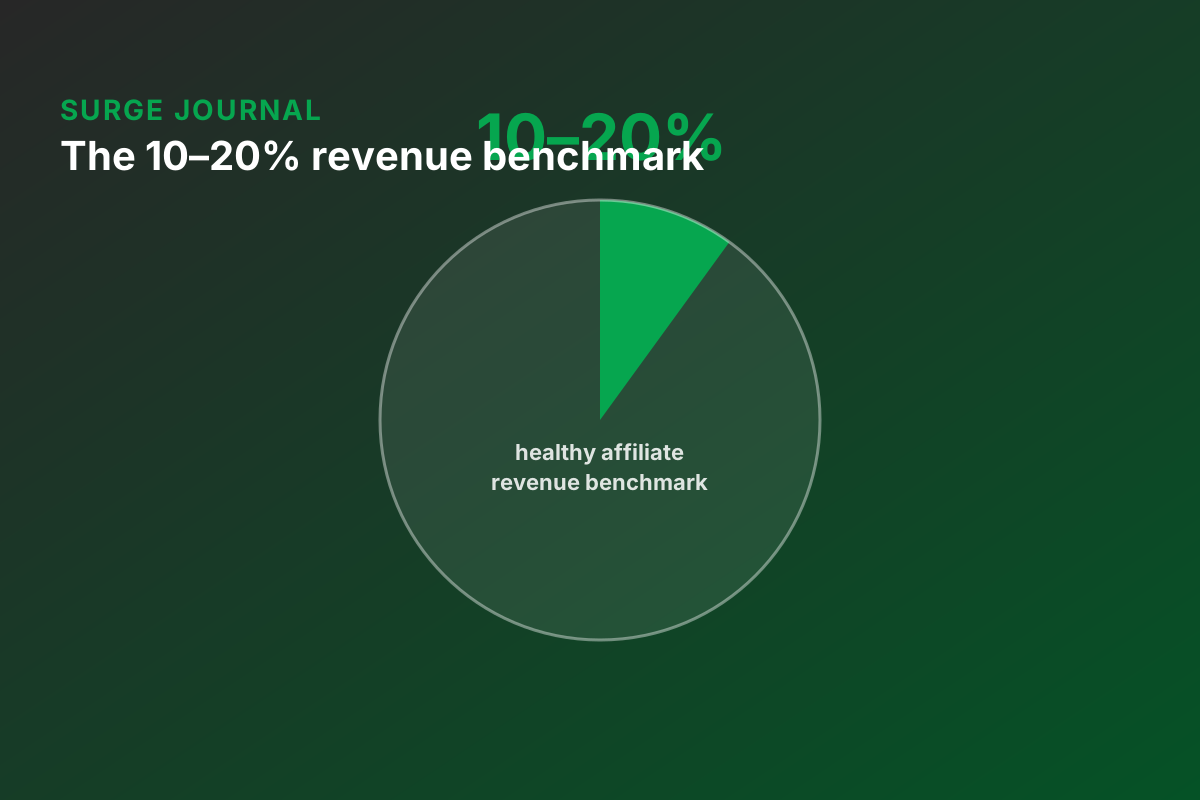
If you only remember one number about affiliate marketing, make it this: a healthy program contributes 10–20% of total online revenue. Less than that and you are leaving growth on the table. More than that, and you might be over-rotating on coupon and deal sites.
This article unpacks the benchmark — what it measures, why it matters, and what a healthy publisher mix looks like under the hood.
Why 10–20% is the standard
Established affiliate programs across DTC and retail consistently land in this band. Above 5% means the channel is doing meaningful work. Below 5% usually means one of three things:
- The program is too coupon-heavy and not capturing top-of-funnel demand.
- The brand has not recruited beyond the network’s auto-applied publishers.
- The commission structure does not motivate publishers to promote.
Above 20% — assuming the channel is healthy and not just over-counting — means the brand has cracked something most competitors have not. Worth scaling, but also worth monitoring for incrementality (is the program driving sales the brand would have made anyway?).
The full-funnel publisher mix
Healthy programs do not get to 10–20% by stacking one publisher type. They do it by balancing across six categories:
- Content & influencer — long-form editorial, creator storefronts, top-of-funnel discovery. Examples: Condé Nast, Hearst, LTK.
- Credit card linked offers — card-linked incremental spend through cardholder rewards. American Express, Chase, Mastercard.
- Shopping & deal — vertical-specific discovery, deal aggregation, and comparison. ShopStyle, Lyst, Capital One Shopping.
- Charity — mission-aligned audiences with pre-qualified buyer intent. StudentBeans, FlipGive, Giving Assistant.
- Tech solutions — conversion-rate, AOV, and on-site optimization tools run on CPA through the affiliate channel instead of flat SaaS fees.
- Loyalty & rewards — cashback and rewards distribution. Rakuten, TopCashback, Ibotta.
Read the full breakdown of each category →
What “healthy” looks like at each stage
The benchmark is not static — it shifts with program age. Here is a rough year-by-year view:
- Year 1: 5–10% of revenue. The program is building publisher base, testing commission structures, refining offers.
- Year 2: 10–15% of revenue. Top publishers are activated and recurring. The program runs the promotional calendar end-to-end.
- Year 3+: 15–20% of revenue. Mature program, stable partner mix, sustainable margin. Optimization shifts to new publisher categories and creator activation.
What to do if you are below 5%
Start with a program audit. The diagnostic should answer:
- Is your publisher mix dominated by one category? If 80%+ of sales come from coupon sites, you are missing top-funnel discovery.
- Are commissions tiered or flat? Flat commissions over-reward bottom-funnel publishers and under-reward content partners who do the awareness work.
- What is your new-customer ratio? A healthy program drives 40%+ new customers through affiliate. Below 20% means coupon stackers are taking commissions on returning shoppers.
- Have you recruited beyond the network’s default applications? Most networks auto-approve a generic base. Surge recruits an additional 50–200 partners per program based on category fit.
Frequently asked questions
How do I measure “% of revenue from affiliate”?
Sum affiliate-driven sales (tracked in-channel + reconciled in Google Analytics) divided by total site revenue for the same period. Use a 30-day attribution window unless your network defaults to something different.
Is 10% achievable in year one?
For most established brands, yes — but it requires active recruitment beyond the network’s default base. Pre-launch and very-early-stage brands typically hit 5–8% in year one and ramp to 10%+ in year two.
What if my program is at 25%+ — is that a problem?
Not automatically. Worth checking incrementality: are those sales new sales, or are coupon publishers taking credit for what the brand would have earned anyway? An audit can quantify the gap.
How do I rebalance if I am too coupon-heavy?
Three moves: tier commissions so content publishers earn more than coupon, recruit 20–30 mid-funnel publishers (content, review, BNPL) in 90 days, and consider excluding coupon stackers via terms updates.
Does the benchmark differ by vertical?
Slightly. Apparel and accessories trend toward 12–18%. High-AOV verticals (home, furniture) often land at 8–12% because individual sales are larger. Beauty and wellness reach 15–25% when content publishers are well-recruited.
Need help applying this?
Let's pressure-test your affiliate program.
Surge runs affiliate programs for ecommerce brands across the U.S. The audit is complementary — book a call to see what a healthier publisher mix and tighter commission design could do for your numbers.
LET'S SURGE!